Why Paul Kennedy of Walker Area Community Foundation Never Gives Away a Dollar
Deanna Parrish September 16, 2026
Deanna Parrish September 16, 2026
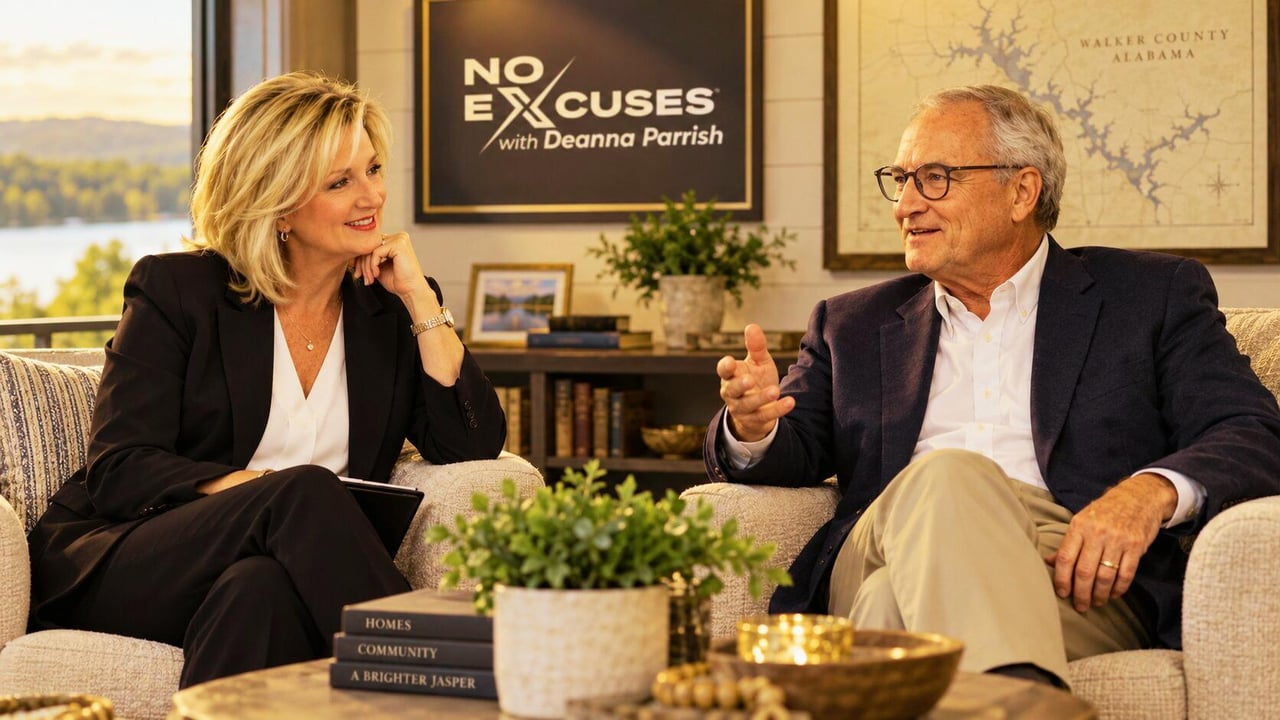
Walker County did not turn itself around by accident. It took one endowment, one philosophy, and one man who refuses to spend the seed corn. That is the real story behind Paul Kennedy of Walker Area Community Foundation, and it is why I sat down with him for this episode of No Excuses.
Paul has led the foundation for 19 years, growing its endowment from 10 million dollars to more than 150 million. That growth built the reason downtown Jasper filled back up, the reason a hundred million dollar trade school is rising for our kids, and the reason more families are planting roots here instead of driving elsewhere on a Sunday afternoon.
Curious about this episode? Here is a preview of our conversation.
Paul started as a registered forester, not a nonprofit executive. A funding crisis in the 1990s forced him to build his own nonprofit just to keep a program alive, and fourteen years of chasing grants taught him something most people never learn: money that shows up fast rarely stays for long.
That grant hustle connected him to the Walker Area Community Foundation, first as a grant recipient, then almost by accident as its next executive director. He walked into a meeting with local businessman John T. Oliver Jr. expecting to ask for a million dollars. Instead, he was offered the job that would define the next two decades of his life. You can find his professional background on his LinkedIn profile.
Watch the full video here.
A community foundation Jasper Alabama residents rely on is not a charity in the traditional sense. It falls under IRS section 501(c)3, but as a public charity it must meet what is called the public support test, proving that more than a third of its revenue comes from the general public rather than a handful of large donors. That rule keeps the foundation accountable to the whole community, not to one wealthy family.
Paul put it the simplest way I have heard it explained. A checking account pays your bills today. An endowment is your savings account, the money you never touch so it can grow and protect you later. Every dollar donated gets invested, not spent, and the foundation lives off the returns. You can see the full scope of that work on the foundation's impact overview.

Paul's old boss used to tell him, "Son, you don't eat your seed corn." That phrase became the operating principle behind the entire Walker Area Community Foundation endowment. Here is how Paul put it during our conversation.
“And that's what a community foundation endowment is. And when we were a $10 million endowment, we had the capacity to do, on the high end $500,000 worth of grant making. Well, and people say, 'So why are you accumulating money?' Well, that was our upper limit because that's a gift to the community foundation; if it's not spent, it's invested. And we're operating off of the investment revenue and off of the dividends that come with something like that. So when I started, we had only $500,000 a year that we could grant out. And I like to say we don't give anybody money. We are investing with another organization in something that we deem to be critical for this community, and we're only able to hit the highest and greatest need. The more that is in that corpus, in that endowment, the more muscle we have, the more distance we can go. And with the 150 million, last year we were able to invest $8 million in this community.”
For anyone weighing whether to invest here, that number tells you everything. An endowment growing from 500,000 dollars a year in grant capacity to 8 million a year is not a lucky streak. It is proof this community has the financial muscle to keep reinvesting in itself for decades.
One of the more sobering parts of our conversation was about who actually shows up at a food pantry. Paul said the foundation used to treat hunger as an isolated problem. Now they treat it as a symptom of something bigger. Census Bureau research on caregiving grandparents shows millions nationwide are raising grandchildren, often on fixed incomes never built for a second round of parenting.
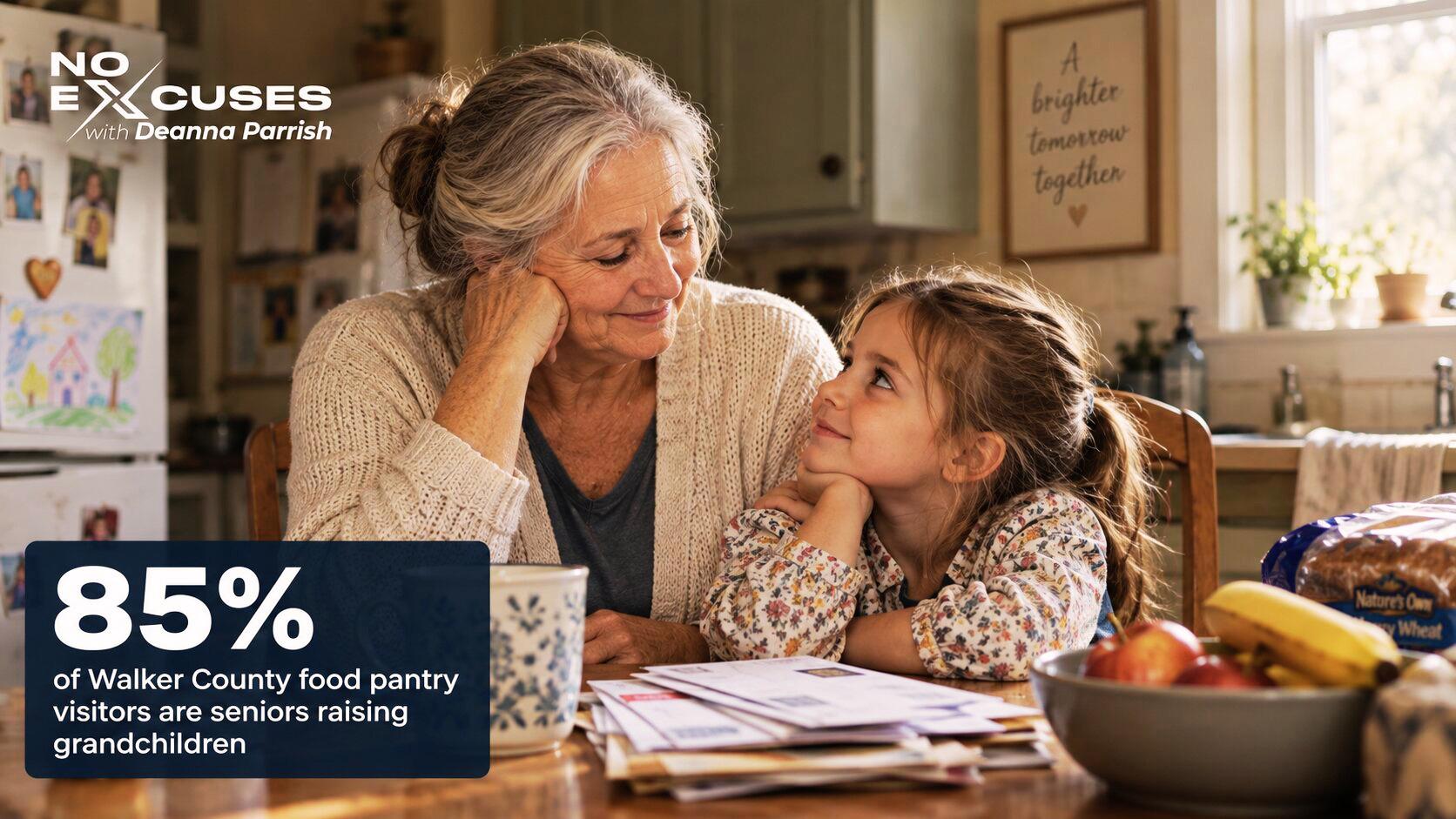
In Walker County, Paul told me that number is 85 percent of the people served by local food pantries. Most are seniors living on less than 1,500 dollars a month, sometimes supporting five people in one household. That is not a food problem. That is an income problem wearing a food problem's clothes.
This is where the conversation turned practical, and it is the part every real estate agent and homeowner in this area should pay attention to. Paul explained why older homes are quietly draining household budgets every single month.
“Individuals like that are often living in older houses that they're going to defer maintenance on because they can't afford it. So they're putting their available cash into whatever they need today, right? But there are programs out there that we've brought to Walker County before that we would love to bring back in a big way that do things like weatherization, storm windows, storm doors, more efficient appliances, insulation. And think about it, Deanna. If they are paying $500 a month for their utilities, if we can weatherize that house and bring it down to 200 a month, they've got $300 a month now that they can put back into that immediate need. And there are a lot of them. I know several of them have come through and said, 'I can't pay my power bill this month. Can y'all help us?' And it's always a tradeoff. I mean, they have medical bills, they have pharmaceutical bills, they have food bills, they have utility bills, and it's always a game of which one it's Robin to pay Paul.”
Programs through the Department of Energy's Weatherization Assistance Program exist for exactly this reason. Older housing stock does not just cost more to heat and cool. It quietly forces families to choose between the light bill and the pharmacy.
For years, Paul and his team heard the same answer from local school systems: we need better career and technical pathways, but we cannot afford to build them without debt we cannot carry. After five years of that conversation, the foundation decided to build it themselves and hand it over.
That decision became the Heman Drummond Center of Innovation, a hundred million dollar investment in Walker County career and technical education. Paul was blunt about why the facility matters as much as the curriculum. Kids learning trades in a fifty-year-old, metal-sided building deserve better than a space that looks correctional. He wants them walking into something that tells them they are worth it.
The center covers welding, HVAC, nursing, and a cyber technology partnership with Bevill State Community College. Students can start a fast-track HVAC program as rising sophomores and finish high school with credentials most adults never earn, often stepping straight into paid apprenticeships instead of quitting school for lower-wage jobs.
Not every investment in this community involves government funding or a building project. Sometimes it just takes one honest question. Paul told me about a wealthy local man who had never given a dollar to the foundation, despite years of quiet opportunity.
“I had a gentleman one time that I knew was a gentleman of means, and he had never contributed to the community foundation. One day I was sitting down with him, and I looked at him, and I said, 'Why haven't you ever contributed to the community foundation?' He just looked at me. He wasn't a joker or anything. And he said, 'You've never asked.' I said, 'Okay, I'm asking you.' And he became a faithful donor to the community foundation. People want to be asked.”
That story stuck with me long after we stopped recording. So much of what holds a community back is not a lack of resources. It is a lack of somebody simply asking. Paul built a group called the Collective around that same idea, giving people under 30 a real seat at the table instead of waiting for them to show up on their own. Anyone looking to get involved can find current openings through the foundation's get involved page.
Back in 2014, the foundation ran roughly 1,500 interviews and town hall meetings across Walker County. What they heard was rough. People were not proud to say they were from here, and they knew outsiders felt the same way. That has changed.
Downtown Jasper went from a 50 to 60 percent vacancy rate to 95 percent occupancy. Dr. David Roland took an early risk buying the Burton building on the square when nobody else would touch downtown, and that decision sparked new restaurants, shops, and two breweries. Success became contagious, and people started believing this town could compete with anywhere else in Alabama.
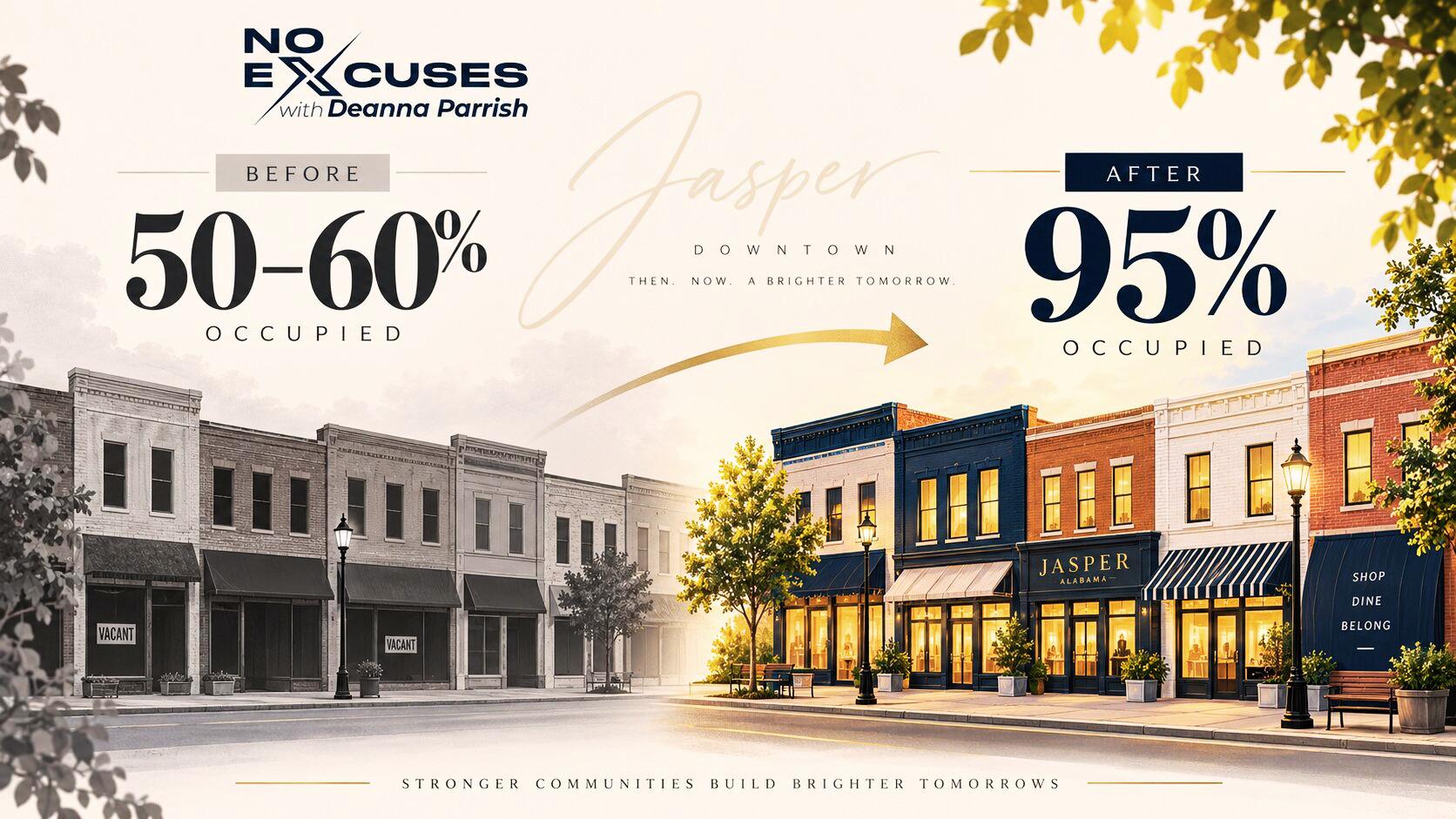
That shift matters just as much for Walker County economic development as any single grant or building project. A community that believes in itself attracts the kind of buyers, employers, and neighbors who want to stay. It is the same instinct behind a nearby rural school district landing international attention of its own and the scramble that saved a local radio station in ten days. This region keeps proving it can compete on a bigger stage.
Growth like this builds through the kind of steady, community-level coordination groups like the Walker County Nonprofit Council handle every day, paired with local businesses learning to get found by the people already moving here.
Whether you are relocating for a job, chasing a slower pace of life on Smith Lake, or trying to understand what actually gets a buyer to the closing table in a market like this one, the story is the same. Communities that reinvest in themselves become communities people want to buy into.
That is the real reason Paul Kennedy of Walker Area Community Foundation never gives away a dollar. Every dollar he touches is working for Walker County's next fifty years, not just its next headline.
Want to hear my entire conversation with Paul Kennedy of Walker Area Community Foundation about how a $150 million endowment is rebuilding Jasper's economy and workforce from the ground up? Listen to our podcast episode!
A registered forester by training, Paul Kennedy has served as president of the Walker Area Community Foundation for 19 years after building and running his own nonprofit for 14. His tenure has taken the endowment from 10 million to more than 150 million dollars, giving him a rare, long-term view of how sustained investment reshapes a community.
It is a hundred million dollar career and technical education facility in Jasper offering training in welding, HVAC, nursing, and cyber technology, with paid apprenticeship pathways starting as early as tenth grade.
A growing endowment signals long-term financial stability. It funds workforce development, downtown revitalization, and quality of life improvements like early education and healthcare, all of which shape why buyers and employers choose a community rather than pass it by.
Walker County did not turn itself around by accident. It took people willing to reinvest, ask hard questions, and show up consistently. If you are working in real estate, finance, community development, or a related field and solving real problems for real people, I want to hear your story.


Whether you are buying a home in town or a retreat on Smith Lake, Deanna is your local connection. She leverages deep community roots to find properties that perfectly match your lifestyle. Connect with her to start your journey.