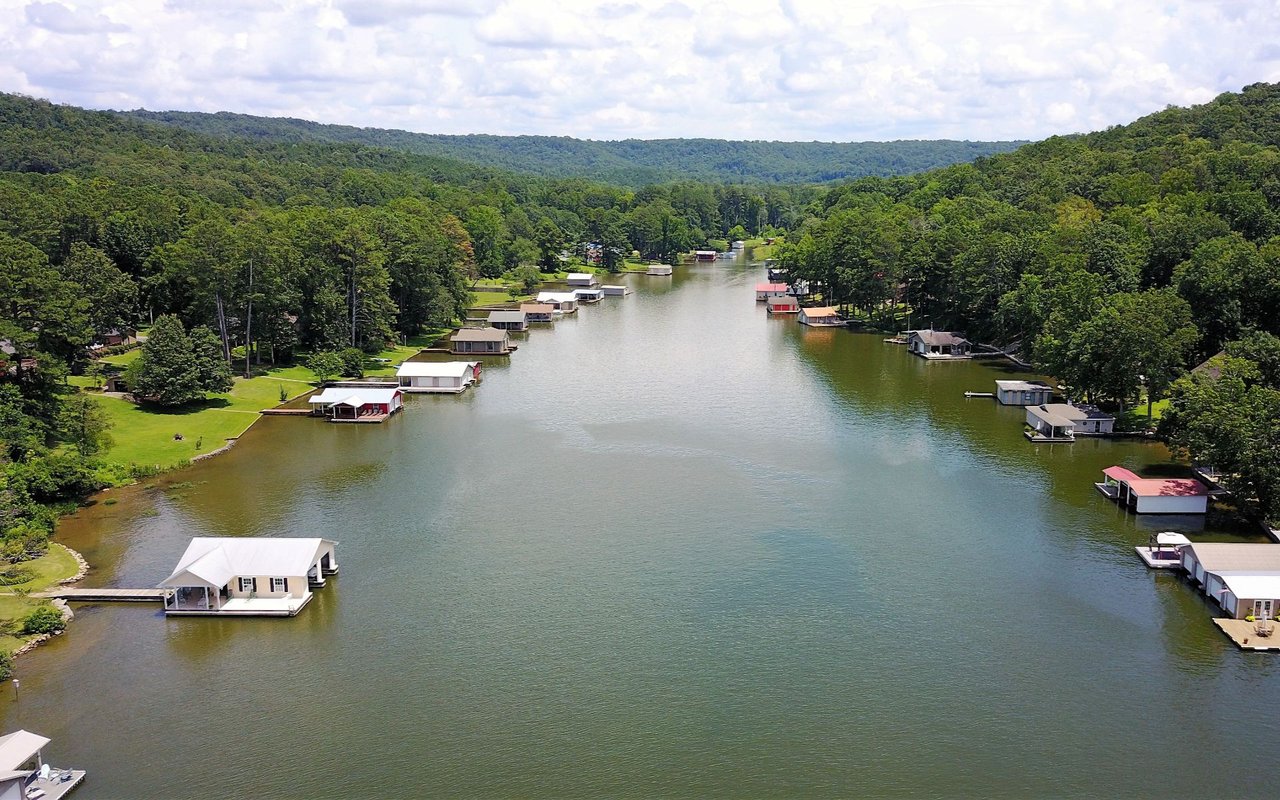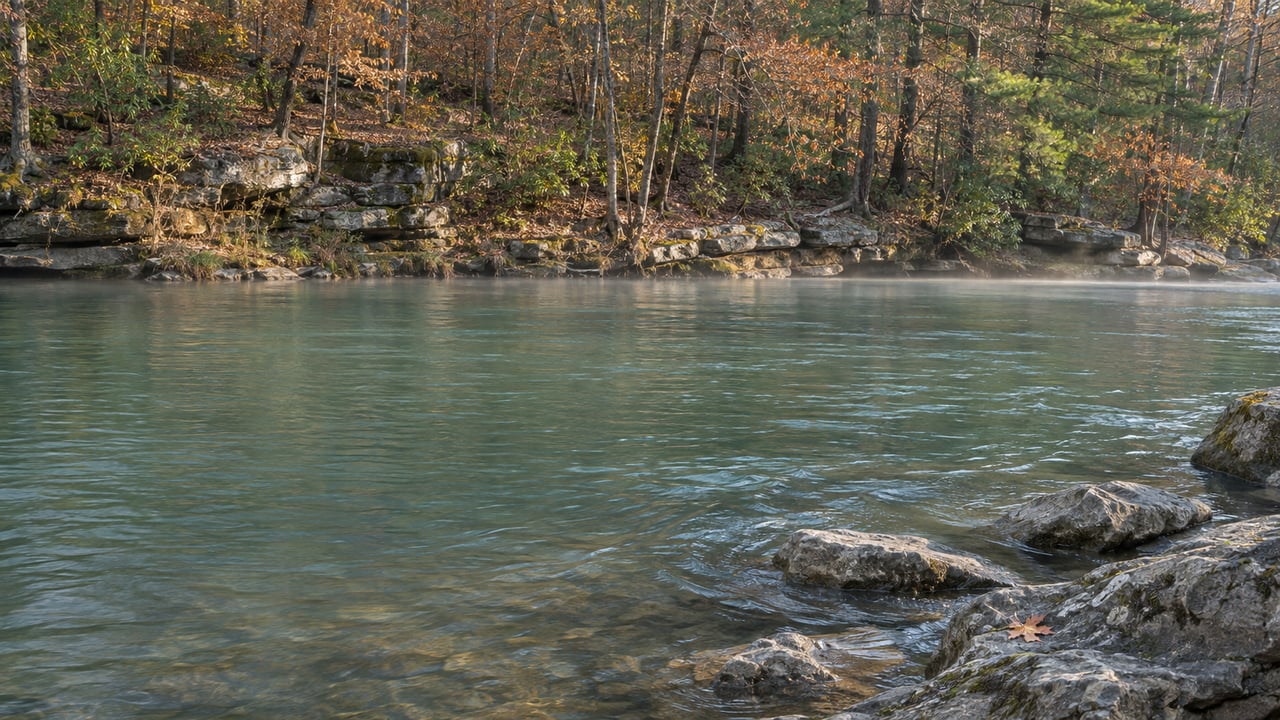
Stocking Day on the Sipsey Fork Below Smith Lake Dam
November 19, 2026
Today, Thursday, Nov. 19, the state stocks rainbow trout in the Sipsey Fork below Lewis Smith Dam. It does the same on the third Thursday of every month, all year. The 2026 stocking schedule from Outdoor Alabama lists 1,100 pounds of 7- to 13-inch rainbows for today and the same amount on Dec. 17, the last date on the 2026 table.
If you live on the Cullman County side of the lake, Alabama's only year-round trout water is a short drive down Highway 69. Up on the lake, fall means stripers holding near the dam and the slow drop to winter pool. The river below the dam runs on a different schedule from the lake. The stocking date doesn't change from month to month. The water level can change within the hour.
Rainbow trout need cold water, and north Alabama summers don't provide it. The lake does. Lewis Smith Dam is 300 feet high, and the powerhouse draws water from deep below the lake's surface to turn its two turbines. That water leaves the powerhouse clear and stays below 70 degrees all year. The state has stocked rainbows in this stretch of the Sipsey Fork of the Black Warrior River since 1974.
The Alabama Wildlife and Freshwater Fisheries Division runs the stocking under agreements with the U.S. Fish and Wildlife Service and Alabama Power. The fisheries page puts the total at about 3,000 rainbows a month, 8 to 14 inches long. The trout go into the river through a quick-release system near the Smith Dam fishing platform on the west bank.
The size of the fish changes through the year. The 2026 table lists 7- to 13-inch fish for January through March, July, October, November and December. In April, May, June, August and September it lists 11- to 18-inch fish, and those months carry 1,000 pounds per stocking. If you want bigger stocked fish, mark spring and late summer on your calendar. Some fish also last well past the day they're stocked. Outdoor Alabama says some trout survive a year or more in the Sipsey Fork, and 18-inch holdovers weighing a couple of pounds are caught every year.
The powerhouse that chills the river also controls how high it runs. When Alabama Power generates electricity, the tailwater can rise 12 to 15 feet and the current becomes dangerously fast. Sirens sound when generation starts. Outdoor Alabama warns that wading anglers need to get out of the stream and up the bank quickly once the water starts rising, and that the river takes several hours after a release to settle back to a flow that is safe and fishes well.
Alabama Power posts tentative operating times on the Smith Lake page of its Shorelines site. Its Shorelines app also has generator schedules. In the days just before this stocking, that page listed one generator running for an hour or two in the early morning: 6 to 7 a.m. on Nov. 16, 5 to 7 a.m. on Nov. 17 and 6 to 7 a.m. on Nov. 18. That pattern can change from week to week. Outdoor Alabama also lists 1-800-LAKES-11 for generation schedules and notes that they can change without notice. Check the schedule before you leave the house, and keep listening for the sirens once you're in the water.
The stretch from the dam to the Highway 69 bridge is the walk-in section. Alabama Power owns the stream frontage on both banks there, and anglers can reach the water from company land. Most anglers from the Bremen side get in along Cullman County Road 95, which runs parallel to the river on the east side. Several pull-offs along the road have trails down to the water. Outdoor Alabama warns that the banks are steep. There is also a large parking area next to the Birmingham Water Works Pumping Station.
From there, the river changes in three stretches:
Some of the fish holding in that upper stretch are there because of habitat work done years ago. In early 2011, the state, Alabama Power and Trout Unlimited anchored rock points, mid-channel boulders and woody structures in the river just upstream of the pumping station, and built a rock ramp so anglers could reach them. That summer, crews placed 24 fish attraction devices between the pumping station and the Highway 69 bridge. The local Trout Unlimited group is the Sipsey Fork Chapter, Chapter 636. The tailwater also has a year-round minimum flow, which Outdoor Alabama says is meant to make conditions more like a natural stream, improve water quality, keep summer temperatures down and help more trout survive.
Below the Highway 69 bridge, Outdoor Alabama describes the Sipsey Fork as water you fish from a boat, and much of the land along the banks is privately owned.
A private ramp just below the bridge is open to unmotorized boats and kayaks. The launch fee is paid at Riverside Fly Shop nearby. The next takeout is a public ramp off Highway 22 in Sipsey, where the Sipsey and Mulberry forks meet. Outdoor Alabama says to plan on 6 to 10 hours for that float. If you start late in the day in December, you could still be on the river after dark.
Riverside Fly Shop is at 17027 Highway 69 South, which uses a Bremen 35033 address. Brandon and Mary Carole Jackson own and run it. The shop rents NuCanoe kayaks for the Sipsey Fork, with paddle and life jacket included. It also runs an 11-mile one-way float with a shuttle back: you call when you're done and they come get you. If you want to float the lower river without owning a drift boat or arranging a second car, that's the simplest way to do it.
These are the prices on the Riverside Fly Shop website. Call (256) 287-9582 to confirm them before you go.
The same guide page also lists trips for striped bass, largemouth and spotted bass, and panfish.
The river is cold in winter. Outdoor Alabama puts the water temperature in the 40s in winter and the 60s in summer, and recommends insulated hip boots or chest waders for anyone who plans to wade. Most fly anglers on the Sipsey do wade.
You don't need much tackle. Line in the 2- to 6-pound range is enough, and the baits Outdoor Alabama recommends are spinners, small spoons, salmon eggs, corn and PowerBait. Fly anglers use long, light rods of 5-weight or less. In summer and fall, flies that imitate grasshoppers, crickets, beetles and ants work because those insects are plentiful. By late November those are mostly gone, but midges hatch year-round on the Sipsey. Mayfly and caddis hatches do happen, though the water releases make them unpredictable. Rainbows in the Sipsey eat mostly aquatic insects. The larger holdover fish sometimes eat threadfin shad.
Outdoor Alabama publishes the trout limits for the Sipsey Fork on the official freshwater creel and size limits page and on its Sipsey Fork tailwater page.
The Dec. 17 stocking is the last date on the 2026 table. If out-of-town family is staying with you the week before Christmas, you can plan a winter morning on the river around that date.
Being able to drive down Highway 69 on a Thursday morning and fish for trout is part of living on the Cullman County side of Smith Lake. If you're weighing a lake home, a weekend place or acreage around Smith Lake and want to know how close it puts you to the tailwater, the boat ramps or anything else on your list, Smith Lake Real Estate can help you sort it out. Contact Me Now.






Whether you are buying a home in town or a retreat on Smith Lake, Deanna is your local connection. She leverages deep community roots to find properties that perfectly match your lifestyle. Connect with her to start your journey.