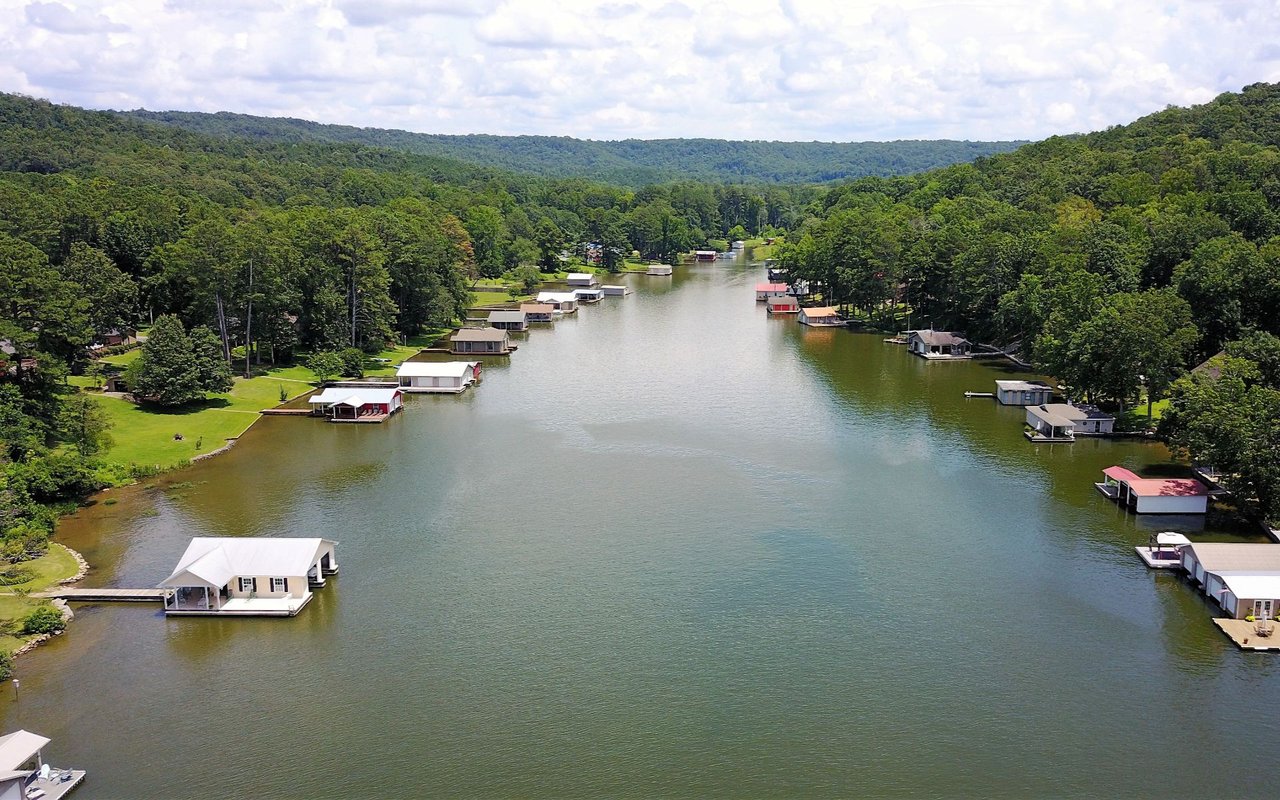
Smith Lake's Fall Fishing Rules Change Before The Fish Do
October 1, 2026
October 1, 2026
Drop a bait off the back of a boat near Lewis Smith Dam any afternoon this week and your depth finder will show open water long past the 100-foot mark before it hits bottom. That's normal for late September. The lake's biggest striped bass have spent the summer holding in that cold, oxygen-rich water near the dam, and most of them haven't moved.
That's about to change, but not for the reason you'd think. On Smith Lake, the fish move on the thermometer's schedule. The rules that govern what you can keep move on the calendar's. Right now those two schedules are out of sync, and the gap between them is worth understanding if you fish this lake regularly instead of once a summer.
Alabama's fishing regulations treat Lewis Smith Reservoir differently from most of the state's other lakes. Anglers here can keep up to two striped bass over 22 inches per day. But from June 15 through October 15, it's illegal to intentionally cull one of those fish, meaning once a legal striper goes in your box, you can't toss it back to chase a bigger one until the calendar flips.
That date isn't tied to water temperature, spawning behavior, or anything the fish themselves are doing. It's a fixed line on the calendar, and this year it lands less than three weeks from today. The rule exists to protect big stripers during the stretch when they're stacked up and vulnerable near the dam, easy to find and easy to over-target. It lifts on October 15 regardless of whether the lake has actually cooled enough for those fish to disperse.
Most years, it hasn't.
Smith Lake behaves differently than most Alabama reservoirs because of how deep it runs. Near the dam, the bottom drops past 200 feet, deep enough that a boat sitting twenty yards off a lakefront dock can still be floating over triple-digit water. Through the summer, stripers retreat to that depth, holding in the 40- to 100-foot range where anglers "downline" live shad or blueback herring straight down to them.
That pattern typically holds through late September. Archived lake data from November shows water temperatures settling into the low 70s with levels running roughly 8.6 feet below full pool, a sign that the real cool-down, the one that finally pushes fish out of their summer holding areas, doesn't finish until well into fall. Late September and early October sit in the middle of that transition. The big stripers are still grouped up near the dam. The rule that lets you keep them is about to change first.
Once the water cools enough, Smith Lake's fish don't all move to the same place. The lake is split into distinct arms, and each one holds a different pattern.
| Arm of the lake | What it holds | What to look for |
|---|---|---|
| Sipsey Fork | A mix of everything | The lake's main channel, widest range of depths |
| Ryan Creek | Largemouth bass | Shallow, sandy pockets with fallen trees |
| Clear Creek | Largemouth and spotted bass | Similar shallow-water habitat to Ryan Creek |
| Lick Creek | Largemouth bass | Shallow water, though less of it than Ryan or Clear |
| Rock Creek | All-around bass fishing | High bluffs that shade the water through the day |
| Crooked Creek | Spotted bass | Rocky, "stair-step" banks in the lake's upper section |
| Simpson Creek | Spotted bass | Similar rocky structure to Crooked Creek |
Largemouth run toward the western side of the lake, in Ryan, Clear, and Lick Creek, where sandy bottoms and submerged brush give them cover. Spotted bass, the fish most associated with Smith Lake's reputation among serious anglers, hold in the rockier lower section around Crooked and Simpson Creek, where the shoreline steps down in ledges instead of sloping gradually.
None of this happens on October 15. It happens gradually, as the thermocline that separates warm surface water from the cold depths near the dam breaks down over several weeks. Some years that's mostly finished by early November. Some years it drags later. The regulation doesn't wait to find out.
Here's the part that only matters if you're paying attention to both schedules at once. For a stretch of days after October 15, anglers can legally cull striped bass again, swapping smaller fish for bigger ones as they catch them. But the fish haven't necessarily scattered into the creek arms yet. They're often still loosely grouped in the same 40- to 100-foot zones near the dam where they spent the summer.
That overlap, legal to upgrade your catch and still findable in numbers near familiar structure, is short. Once the fish do disperse into six or seven different creek arms, finding a concentration of large stripers gets harder, not because there are fewer fish, but because they're spread across more water. The window where both conditions line up, the rule change and the fish still being where they've been all summer, tends to run just a couple of weeks before the migration finishes and the search gets more complicated.
Anyone treating October 15 as the day everything about fall fishing "opens up" is missing that the lake itself is usually a few steps behind the rule.
The advantage of having a dock here instead of a weekend rental is that you don't have to guess which week that overlap lands in. You can check your own depth finder from your own boat slip and know within a few days whether the stripers near the dam have started thinning out, without needing to plan a trip around it.
Smith Lake's marinas make good reference points if you're getting oriented to which arm you're near. Duncan Bridge Marina and Hueys Marina sit closer to the main body of the lake, while Speegles Marina and Clear Creek Marina put you nearer the creek arms where largemouth and spotted bass hold once the water finishes cooling. Knowing which arm your dock sits closest to tells you which pattern you'll be fishing first once the fall migration actually reaches your stretch of shoreline.
None of this is a reason to rush a decision about where to buy on the lake. It's a reason to understand that "lakefront" on Smith Lake isn't one uniform experience. A dock on Ryan Creek and a dock near Crooked Creek put you in front of different fish, different structure, and a different rhythm to the fall season, months before the fish ever show up.
The lake's 21,200 acres and 500-plus miles of shoreline mean there's room for both kinds of water, and for the anglers who fish it right along with them.
If the way this lake's calendar and its water temperature drift apart every fall is the kind of detail that makes you glad you live here, Deanna Parrish would like to hear where your dock sits and which arm you're watching this October.





Whether you are buying a home in town or a retreat on Smith Lake, Deanna is your local connection. She leverages deep community roots to find properties that perfectly match your lifestyle. Connect with her to start your journey.