How Renee Sides Is Using Economic Development for the City of Cordova to Win Families, Jobs, and Investors
Deanna Parrish October 8, 2026
Deanna Parrish October 8, 2026
Small towns grow when they give people a reason to live there, not just work there. That means parks, trails, water access, events, and the infrastructure developers check before they invest.
On this episode of No Excuses with Deanna Parrish, I sat down again with Renee Sides of Cordova Economic Development to talk about how a town of about 1,875 people competes for families and private dollars. Her answer is blunt. A community either grows or it dies.
Curious about this episode? Here's a quick preview of our discussion:
Renee is the Director of Economic Development for the City of Cordova, Alabama. Before that, she owned the Cedar House shop in town and chaired the city's industrial board. She brings a background in construction, supply chain logistics, and inventory management software, and you can follow her work on LinkedIn.
In Part 1, we talked about how Cordova rebuilt after the storm and the city's 20-year comprehensive plan. This time, I wanted the practical side. How does a small town actually win people over?
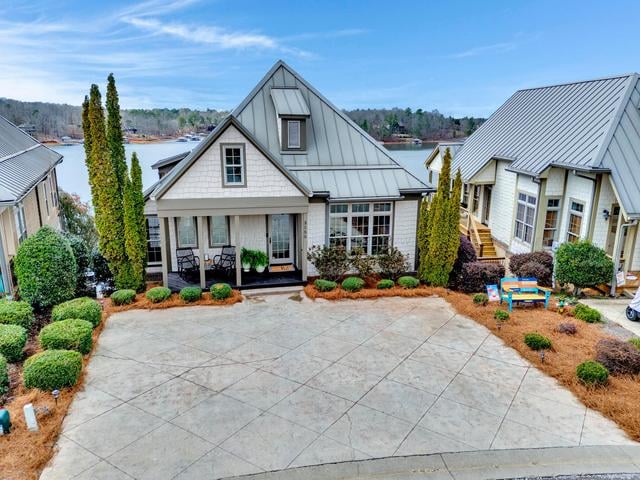
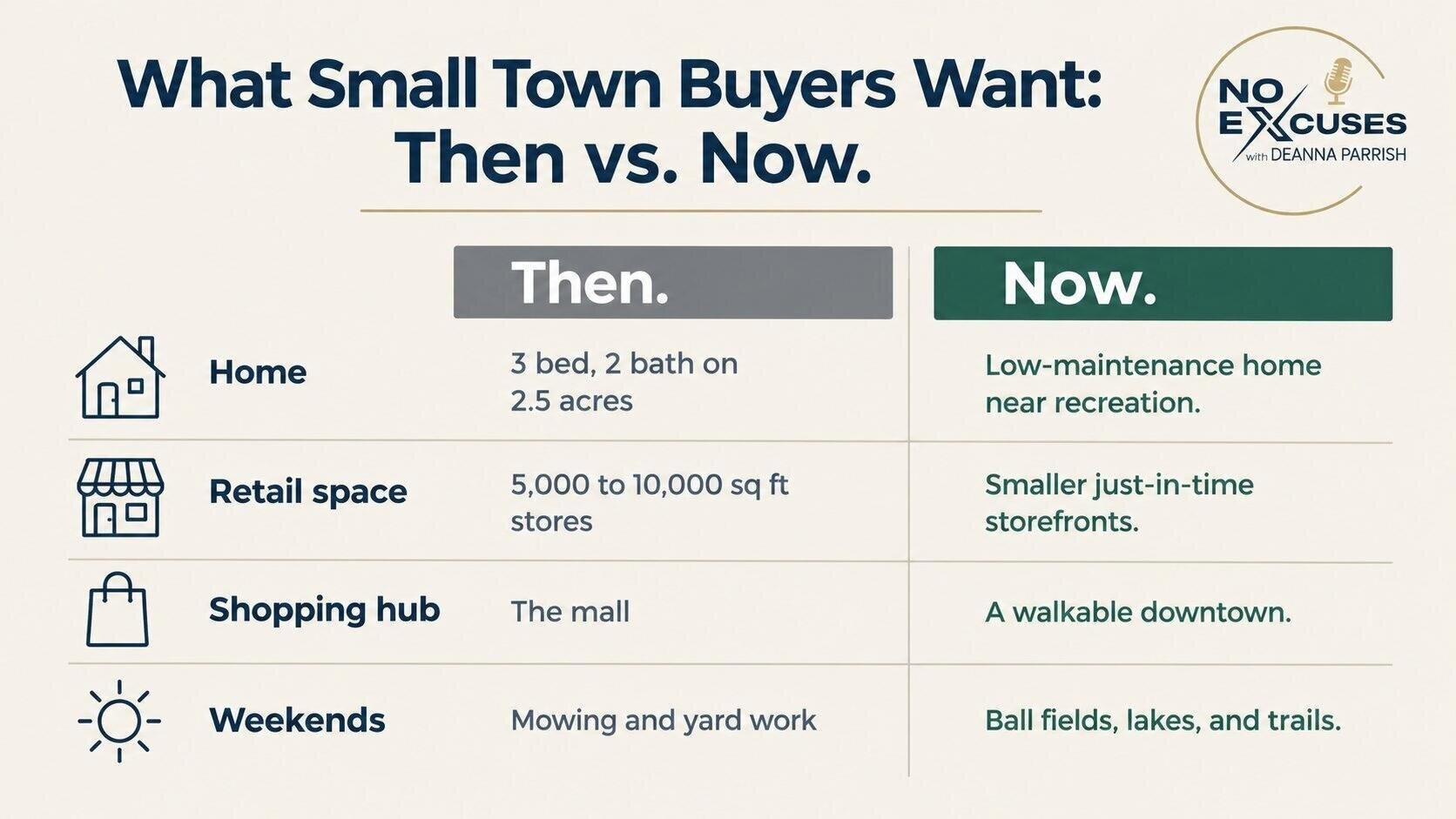
Renee started with something I see in my own buyers. After COVID, people realized they could work from almost anywhere. The 25-to-40 crowd is also marrying later and having kids later. When Renee was growing up, success meant a three-bedroom, two-bath house on two and a half acres. Today's young families don't want to spend Saturday mowing. They want to be at travel ball, on the water, or on a trail.
Watch the full episode here:
Commercial space is shifting the same way. Retailers that once needed 5,000 to 10,000 square feet now want smaller spaces because just-in-time delivery means they don't stock a month of inventory. Malls are fading. Traditional downtowns with small storefronts suddenly fit again.
Then Renee connected it to jobs, and that's where quality of life economic development clicked for me.
“If you've got a major manufacturer, and we'll take Warrior River Steel, for example, and they've got a hundred employees and they want to attract fifty more. Well, it's better for them if they can attract them close to where the plant is because, in my experience, you have less absenteeism, you have fewer people showing up late, and you build a better employee, a more loyal employee, a more consistent employee. But also, if you don't have those quality-of-life assets in the area that you're in, you're not gonna attract them to live where your plant is. So the quality of life truly is an economic development tool that can be used and should be used. I don't care if you're in downtown Birmingham or downtown Atlanta or Michigan or Beaverton, Alabama. Quality of life is important for every employer, for every business, and for every resident, and for your kids coming up.”
The national numbers back her up. The latest federal outdoor recreation economy statistics show outdoor recreation made up 2.4 percent of U.S. GDP in 2024, about $696.7 billion. Boating and fishing led every other conventional activity. Water and trails aren't extras. They're an economy.
Renee also had a word for residents who post that their kids have nothing to do. Have you created anything for them to do? Have you gone to a council meeting and offered to turn a vacant lot into a basketball court? A movie theater isn't coming back to most small towns, and that's fine. Times change. Towns change with them, or they fall behind. If you're thinking about living in Cordova, Alabama, this is the mindset driving the town.
Renee manages 47 projects. Still, she kept circling back to the businesses already open in Cordova. She's working on ways to promote each one individually, and the city has joined the revamped East Walker Chamber of Commerce.
Her reasoning is practical. Anyone thinking about opening a shop in your town will call the owners who are already there. If those owners feel ignored, the prospect hears about it.
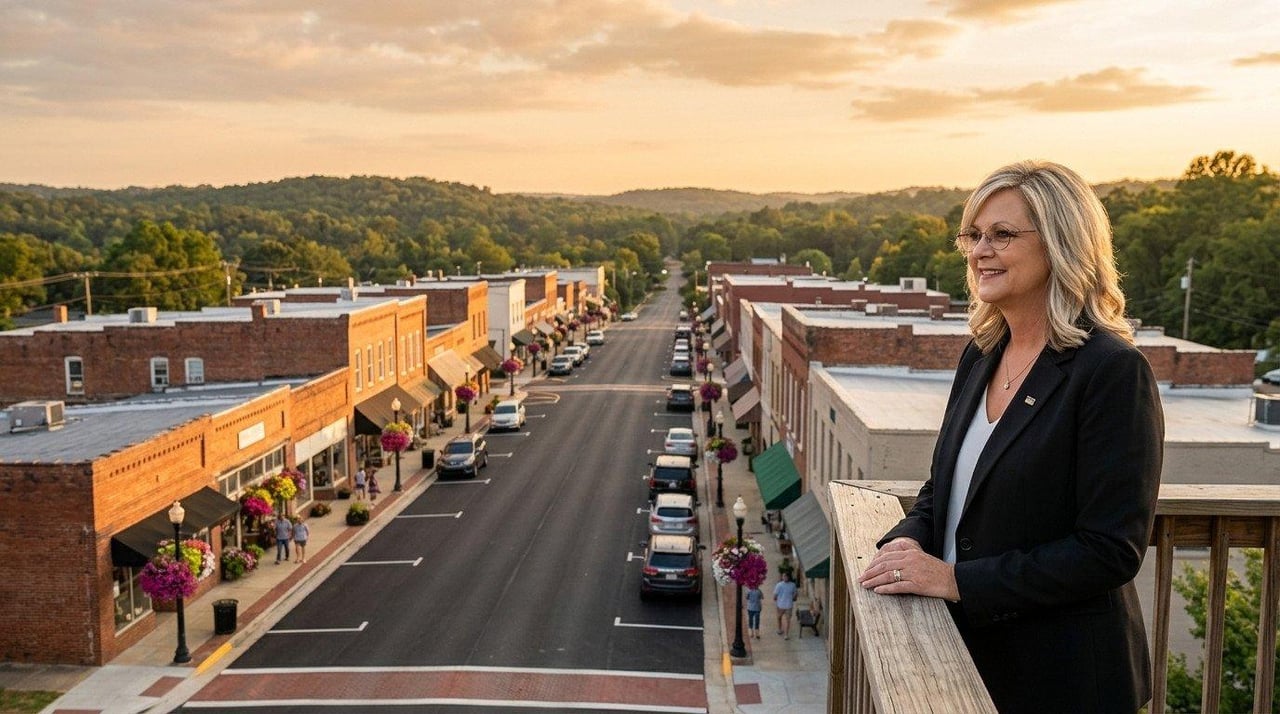
Cordova doesn't have a traditional Main Street yet because downtown has no buildings. So Renee is building to the criteria for Main Street Alabama designation, a competitive program that selects only a few new communities each year. When the buildings go up, the application will be ready.
She also explained how the city's economic and industrial development board fits in. The goal is to offer support to every local business. Some owners have done things one way for years and won't change. That's their call. But the offer should always be on the table.
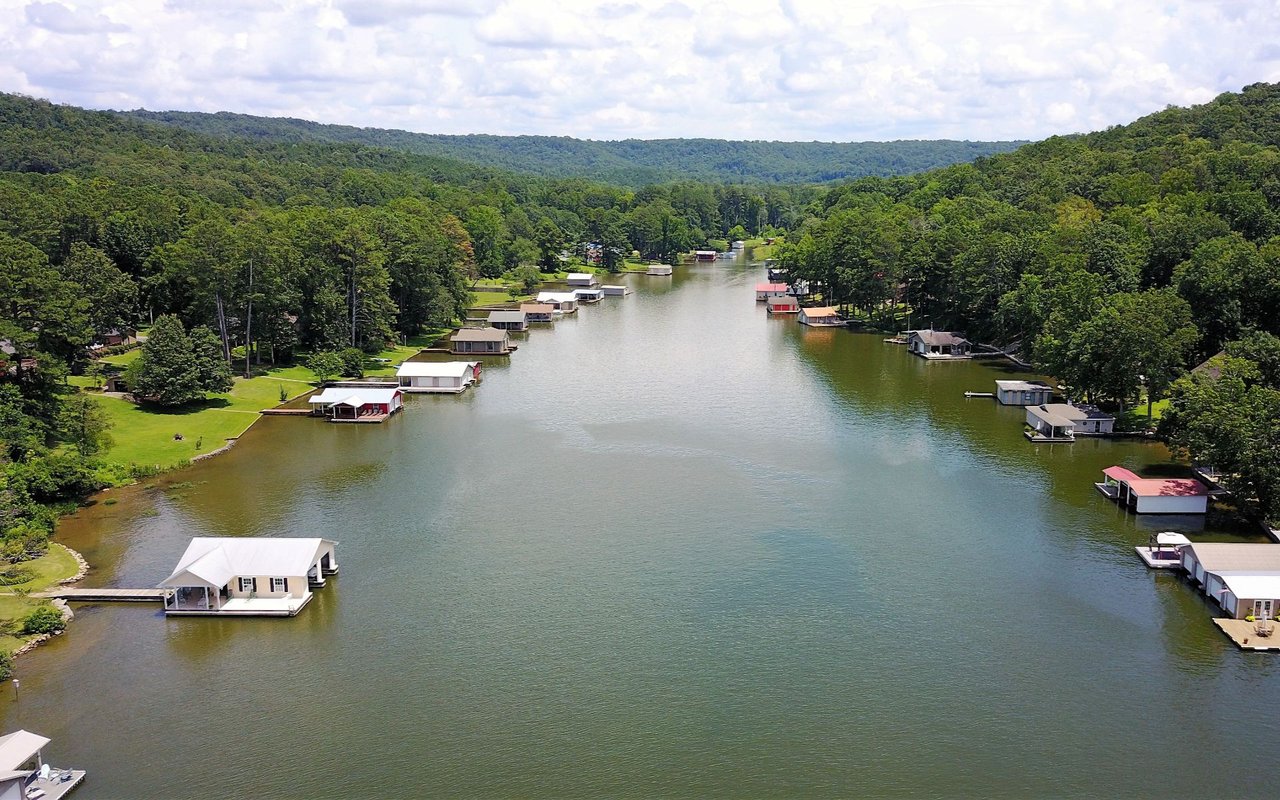
Cordova is bordered by water on three sides, with Cane Creek navigable for kayaks, canoes, and small boats to the Warrior River. The industrial board built a bait and tackle shop at Disney Lake, leased to Cane Creek Camp and Tackle, with campsites, RV spots, and rentals. A nearby owner is adding glamping.
Add the creek walk, the Blueway kayak launch, and new hiking and biking trails, and the list of things to do around Cordova keeps growing. Renee calls the Disney Lake launch the best in the county. It's safe and lit, and the bait shop sits right there. With Walker County Lake closed for renovations, that live bait counter matters more than ever.
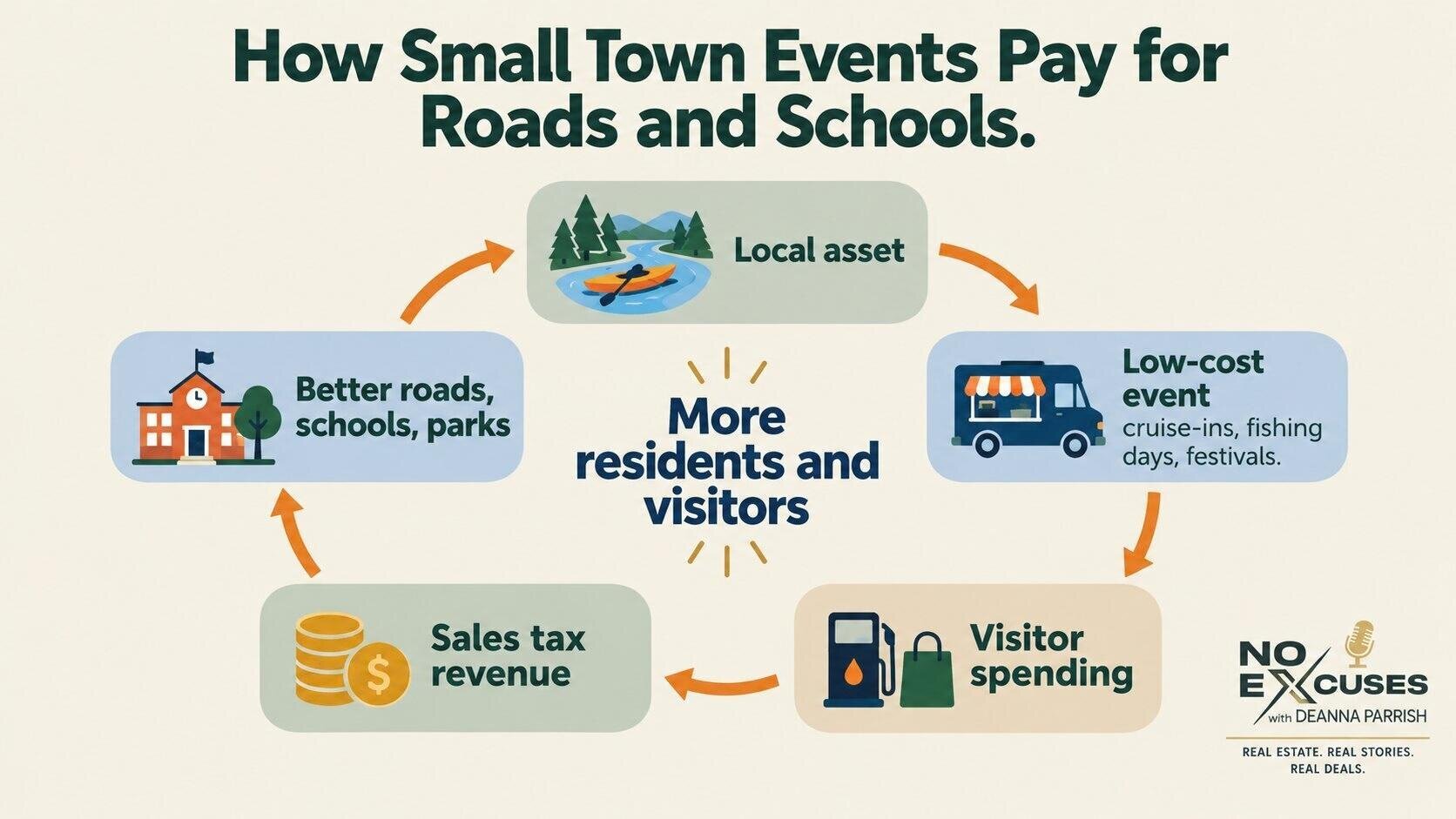
Her favorite events cost the city almost nothing. The monthly cruise-in brings food trucks and just requires open restrooms. The Fourth of July event attracts visitors from Birmingham and Mississippi. Harvest Fest includes the Great Escape River Run, drawing people from Florida, Georgia, and Tennessee.
Visitors contribute sales tax by buying gas, groceries, and drinks, which supports roads and schools. Some even decide to move to the area.
The annual Take a Kid Fishing Day lines up with Alabama's statewide Free Fishing Day, when no license is needed in public waters. Lunch is free. Last year, 42 young anglers attended, some inexperienced. Renee suggests towns without a lake find an unused pond, secure an agreement, stock it, and host an event.
Seek outsider views on assets. Locals see Cordova as lacking; visitors find it beautiful. Renee advised against mimicking bigger cities. She drew inspiration from Helen, Georgia, and the French Quarter to craft a unique plan for Cordova, which she then presented to the council.
Renee collaborates on program management. Shannon Hodge provided lessons through Mission 3:4. The industrial board donated land for a facility, which he built with community support. Now, it's fully booked, and he's seeking expansion. It's a good example of how legacy giving in Walker County turns into real buildings.
Churches matter too. Renee says the church isn’t just four walls. When Linn Memorial United Methodist Church planned a family fun day at the park, the city didn’t fund it. Staff managed the grass, restrooms, and promotion. Soon, people noticed there was always something happening in Cordova.
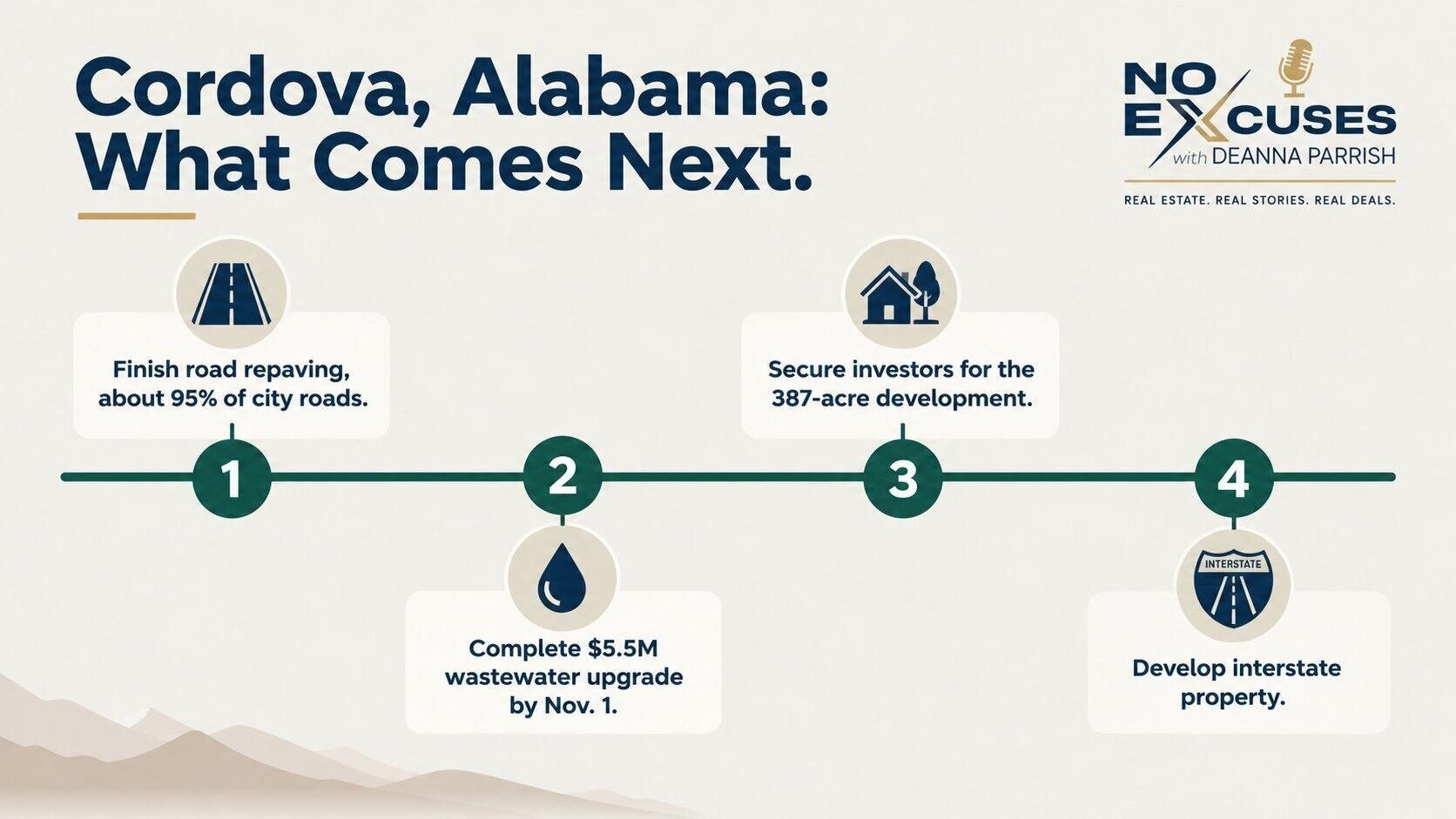
Developers look at capacity first. Cordova is in the middle of a $5.5 million wastewater upgrade that Renee says leaves the large majority of the plant's capacity open for growth. That's rare for a town this size.
The project also adds a screw press and a septic receiving station, paid for with federal dollars and no local match. Cordova will be the only municipality in the county that can accept septic. Pumpers currently haul it to Jefferson County, so the station opens a new fee-based revenue stream.
Roads come next. Cordova's repaving runs on a $6.4 million RAISE grant, part of a federal transportation grant program for rural communities that now goes by the name BUILD. Renee also listed new garbage service, fiber reaching underserved areas, and burying downtown power lines. After living through a storm that downed every line in town, she knows underground power is about resilience, not just looks.
We also talked about infrastructure bonds. Many small towns avoid them because they got burned by financiers or their attorneys don't understand the tools. Cordova found a path that works, and that's a big reason it can move faster than its neighbors.
This is the line I keep coming back to. Renee doesn't believe in standing still, and she treats City Hall like any business with a budget and a growth plan.
“A community is either growing, or they're dying. There is no in between. You either grow, or you die. And you've got to take a risk. And yes, you have to mitigate the risk, but when you look, a local government is no different than a Fortune 500 company. They've just got more financial backing. We have income coming in, and we have expenses going out. We have employees, we have to pay payroll taxes, we have to provide benefits, and we have to look at growth. That's no different than what a private business is. So yes, we have to mitigate risk, but you also gotta take some risk. And if you don't, you're never gonna grow. If you're scared of failing, you're never gonna grow.”
— Renee Sides, Director of Economic Development, City of Cordova
She feels the weight of every resident. The census says about 1,875, though she suspects the real number is closer to 2,100. Some nights she doesn't sleep.
That weight shows up in the programs. Cordova runs an eight-week summer children's program with breakfast, lunch, snacks, lessons, and a weekly field trip. An after-school program offers homework help for kids being raised by grandparents, aunts, and uncles, often because of the opioid crisis. Both keep caregivers in the workforce and give kids a shot at breaking generational poverty.
Most of the people doing this work are volunteers. The council, mayor, planning commission, industrial board, and events committee give their time for little or nothing. Renee believes the fire department is the best in the county, with an ISO rating of 3. It still needs a ladder truck that costs about $1.6 million, and a grant will cover half at best. That's why she wants the next generation to step up, learn the work, and put their own spin on it.
Cordova's biggest milestone is a 387-acre development that combines outdoor recreation and housing. It would be the first subdivision built in Cordova since the 1960s, and the city is now looking for investors. Renee calls it the crown jewel. The town needs housing for renters, buyers, and apartment dwellers alike. Interstate property is also on the table.
Two other deadlines matter. The RAISE paving project will cover about 95 percent of city roads, and Renee is writing a maintenance plan so the new asphalt lasts its full 20 to 25 years. The wastewater project must be finished by November 1, with no extension.
Renee's advice to investors is simple. Find the person in her role. In some towns that's the mayor, a council member, or the city clerk. Tell them what you want to build and let them map out how the city can help. Then stay in touch. If you need something in two years, you don't want to start the relationship over.
“Everything that we do is about relationships. That's what a community is. It's not the city limits. And when potential developers or investors drive into your community, they do not know where the city limit sign is. They don't know where those city lines are. So if you've got an area that's coming in off the interstate or off a main road into your community and it looks like crap, they're gonna assume that's part of your city. All the parcel lines that we see on a map, they don't exist, people. So cut your grass. Pick up your trash.”
That one stuck with me. A buyer judges the whole drive in, not just the listing. An investor does the same with a town. Now I think about the route to every showing, the nearest boat launch, and the next event on the calendar. If you're investing in small towns, start with the relationship and the first impression.
Renee closed with a reminder I needed too. Ask for help. The worst anyone can say is no. If you don't ask, the answer is already no.
I share more stories like this about Jasper and Smith Lake real estate here on the blog. You can also find me sharing Smith Lake property updates on Facebook, local listings on Instagram, and Alabama market insights on LinkedIn.
Want to hear my full conversation with Renee Sides of Cordova Economic Development Playbook, about how a small town of roughly 1,875 residents competes for private investment, workers, and new families?
The most effective small town economic development starts with places people want to live, not just work. Renee explained that employers keep better workers when those workers live near the plant, and families only settle where there are parks, trails, water access, and events.
Cordova Alabama growth is coming from outdoor recreation on Cane Creek and Disney Lake, a $5.5 million wastewater upgrade, citywide repaving, and a planned 387-acre development that would be the town's first new subdivision since the 1960s.
The cheapest rural economic development strategies Renee shared are recurring events run by partners. Monthly cruise-ins bring their own food trucks, churches host family days, and nonprofits build facilities on donated land. The city mostly provides permits, mowing, restrooms, and promotion.
Find the person who leads economic development. That might be a director, the mayor, a council member, or the city clerk. Share your plans early, build a joint plan, and stay in touch so the relationship is already there when you need help.
Small towns across Alabama are competing for people, employers, and private investment, and the people doing that work rarely get the spotlight. If you're a developer, lender, business owner, or community leader solving real problems on the ground, I'd love to hear your story on the show.
Whether you are buying a home in town or a retreat on Smith Lake, Deanna is your local connection. She leverages deep community roots to find properties that perfectly match your lifestyle. Connect with her to start your journey.