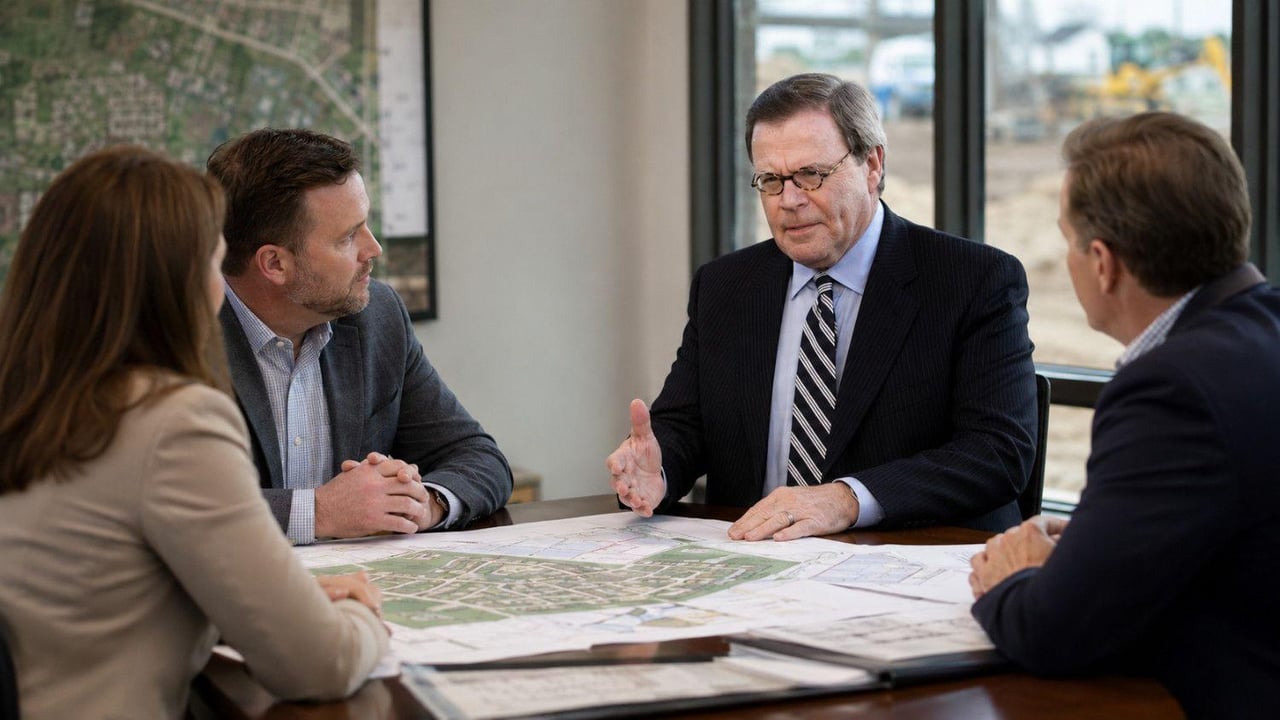
Attorney and Public Finance Expert Bill Blount: Infrastructure Financing in Alabama
Deanna Parrish August 16, 2026
Deanna Parrish August 16, 2026
Every housing development I've watched stall in Alabama has stalled for the same reason: nobody wants to write the first check for streets, sewer, and water before a single house is sold. That's the problem attorney and public finance expert Bill Blount has spent 50 years solving. When Bill drove up from Montgomery to sit down with me on my podcast, No Excuses, I wanted to understand why so many good projects never get off the ground, and what tools actually exist to change that.
Here’s a preview of that episode:
Why I Had This Conversation
I've sold real estate through enough boom-and-bust cycles to know that the biggest obstacle to new inventory isn't demand. It's infrastructure. Every time I hear a builder say a project "doesn't pencil," it's usually because the cost of sewer, water, and roads ate the margin before the first shovel hit dirt.
Bill has been on the other side of that problem for half a century, structuring the bond deals that make horizontal infrastructure possible. I wanted him on my show because agents and buyers alike need to understand why some areas grow and others sit empty, and it almost always traces back to how development gets financed.
Watch the full episode here:
The History Behind Alabama's Development Bonds
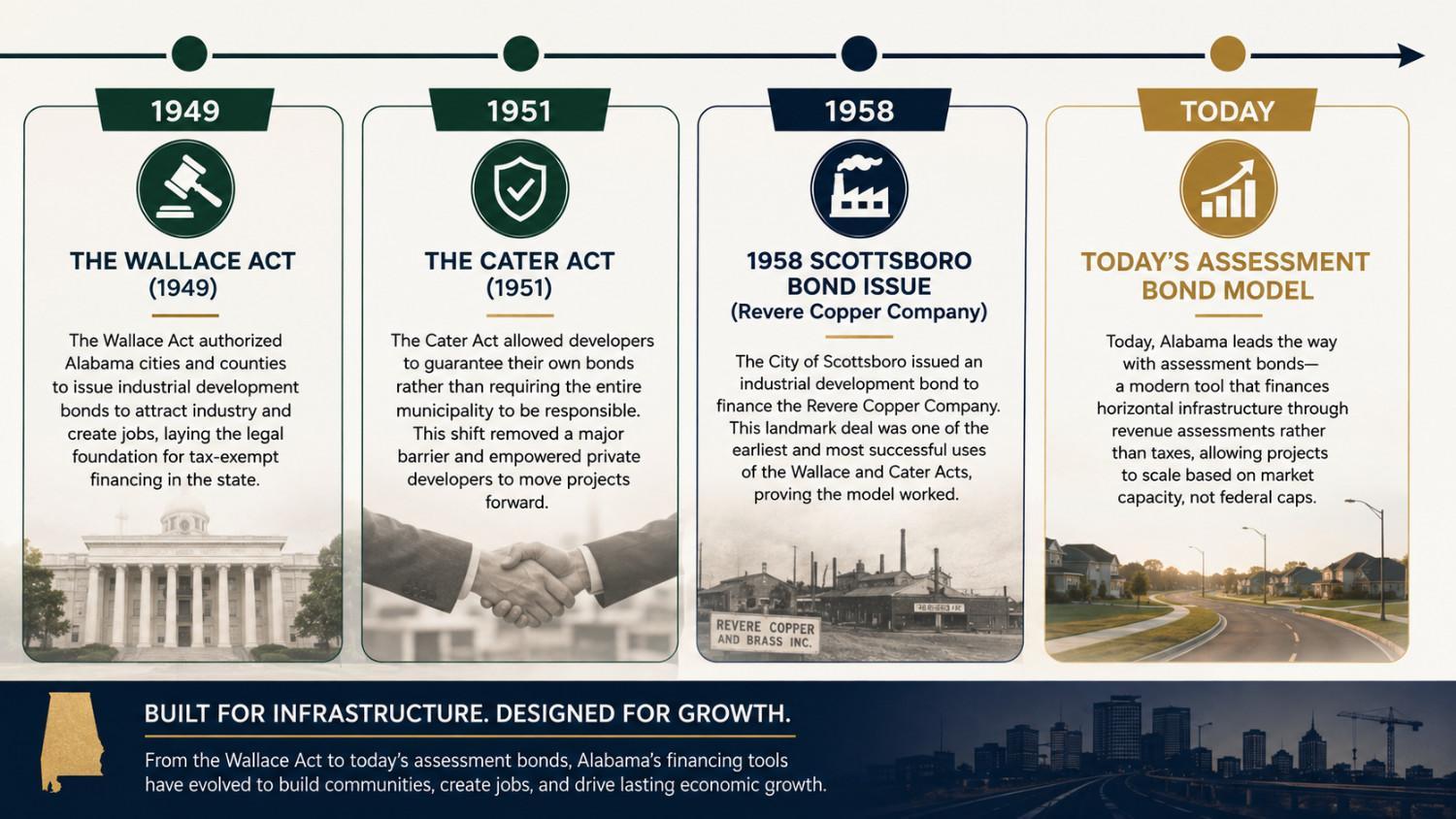
Bill walked me through something I never knew: industrial development bonds trace back to a 1958 bond issue in Scottsboro, Alabama, financing the Revere Copper Company. That deal led to the Wallace and Cater Acts, which let developers guarantee their own debt instead of forcing the whole town to co-sign it.
That single change is why Alabama became a national leader in using tax-exempt financing for economic growth. It also explains why so much of the mill and manufacturing growth across the South ran through structures like this one, long before anyone was talking about assessment districts.
For agents, this history matters because it shows these tools weren't built for speculation. They were built specifically to move dirt and build public infrastructure, which is exactly what today's housing shortage needs.
As Congress tightened restrictions on traditional industrial development bonds, capping them and narrowing what qualifies, Bill and other bond professionals started looking at alternatives. Tax increment financing (TIF bonds) was one option, but it ties debt repayment to ad valorem tax values, which put a lot of political discretion into the mix.
Alabama's shift toward assessment bonds solves that problem differently, and Bill explained it in a way that stuck with me:
"We take the same theory, it's the same added value, but it's not a tax. It's an assessment. It's a revenue enhancement, but it's not a tax. And here's the beautiful thing about this: you're not limited in the amount you can actually issue, like you are with tax increment industrial development bonds. You're limited only by what the market can support and what your project can generate."
–
That distinction, tax versus assessment, isn't just semantics. It's the difference between a developer being capped at a set dollar figure and being able to size financing to the actual scope of the project.
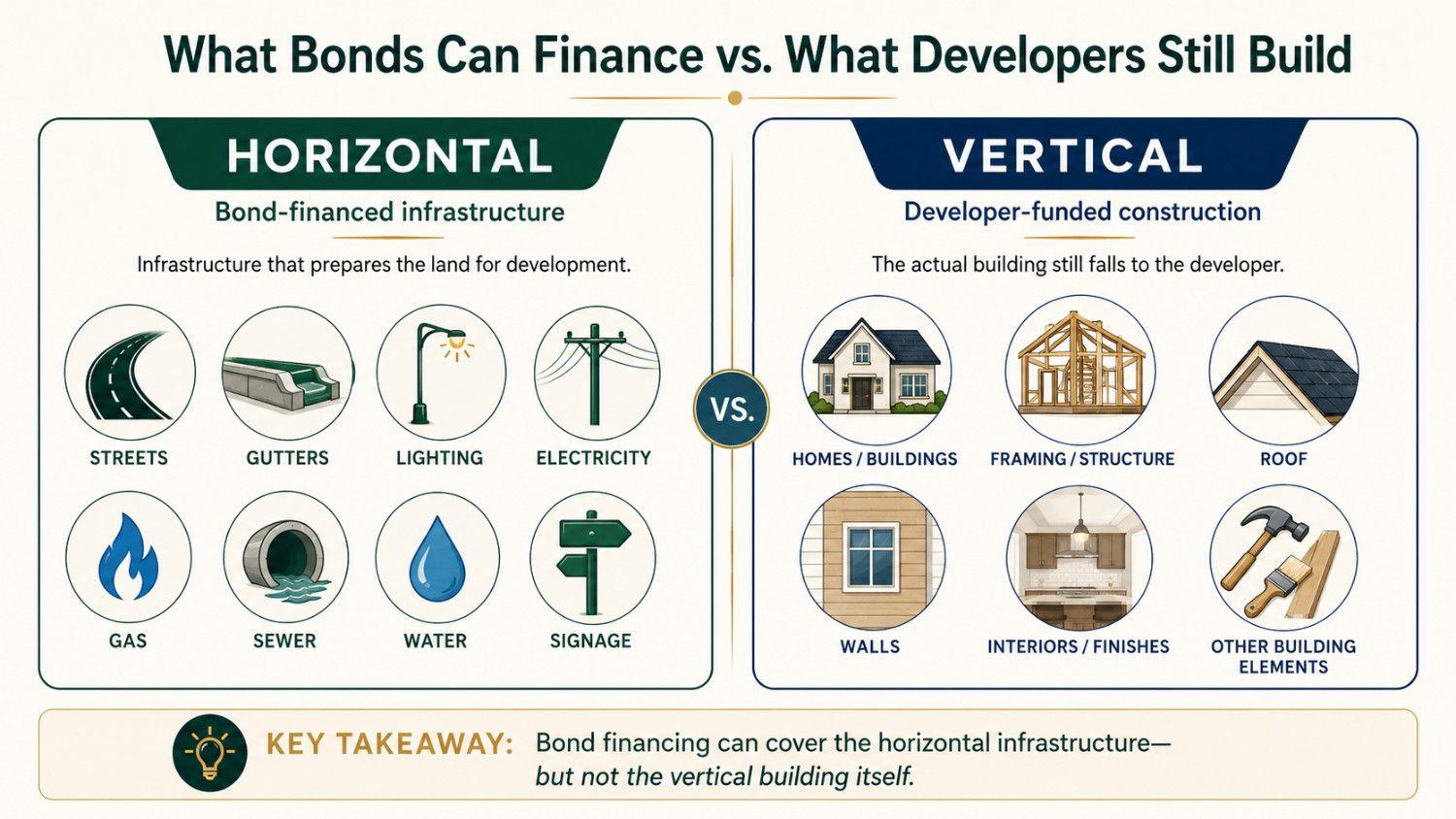
One thing I didn't fully appreciate before this conversation is how broad infrastructure financing really is. Bill described it as anything "horizontal," meaning streets, gutters, lighting, electricity, gas, sewer, water, and even signage. Vertical construction, the actual building, still falls to the developer.
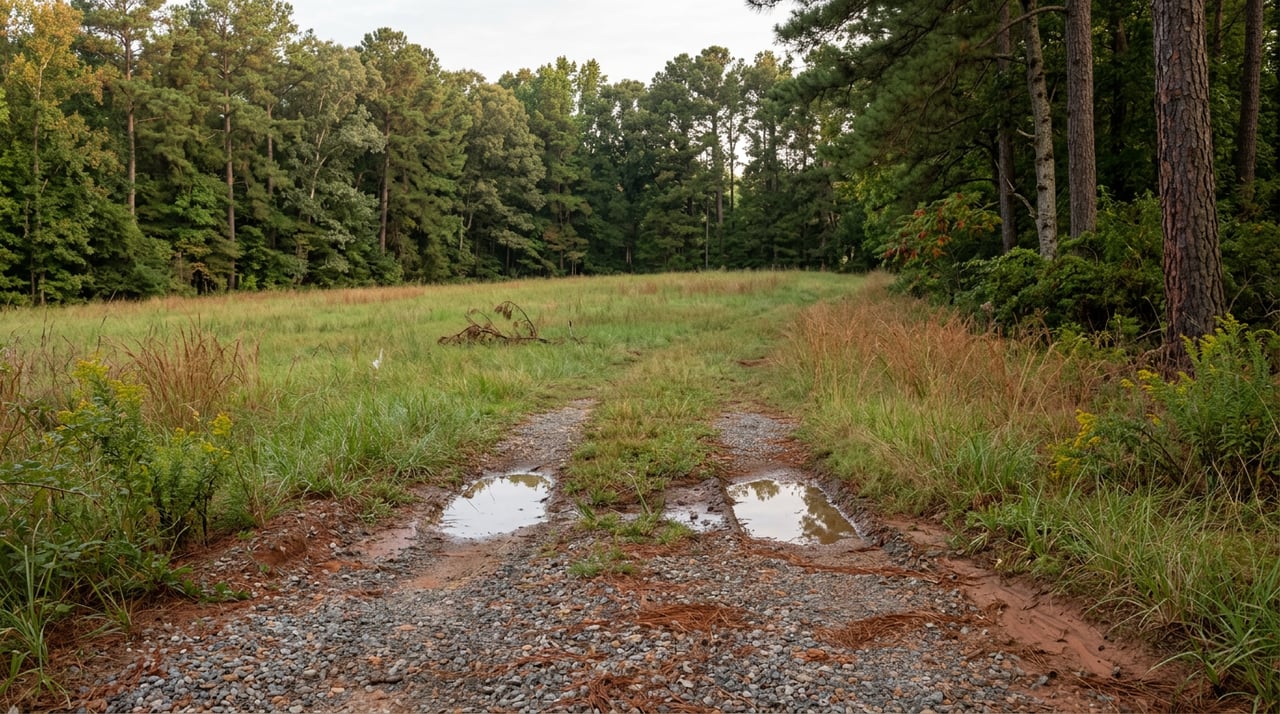
This matters most in housing, where sewer and water access can be the single biggest barrier to breaking ground. Bill pointed out that developers who are ten miles from an existing sewer line are often looking at a million-dollar package plant just to make a project viable. Bond financing removes that upfront burden and spreads it over time instead.
If you're comparing land in different parts of the state, this is exactly the kind of infrastructure question worth asking before you fall in love with a lot, and it's part of why I always encourage buyers to look closely at top neighborhoods in Alabama before committing to a location.
Bill and I spent time talking about why growth clusters where it does. Highway 22 sat undeveloped for thirty years before infrastructure and interstate access finally opened this area up. He made the point that once water, sewer, and roads exist, developers follow, almost predictably.
"People don't realize how much it costs just to develop one tract of land for anything, even a single home. If you can use these infrastructure bonds or development bonds, you can take that upfront payment out of your pocket. You're still paying part of it, but you're spreading the cost out over time. And instead of that money simply going into someone else's pocket, it's going toward the bondholder's principal and interest."
–
We also talked about schools. Bill mentioned a Publix deal that fell through locally because the area couldn't absorb sixty more elementary school students, which is a reminder that school capacity is now a real factor in commercial development decisions, not just residential ones.
For buyers weighing a move, that connection between school capacity and future retail growth is worth watching closely when you start browsing homes for sale in growing areas.
Before my conversation with Bill, I thought about bonds the way most agents do: background noise that doesn't affect a listing. Bill changed that for me.
"When I say infrastructure, I mean streets, gutters, lights, electricity, gas, sewer, water, and signage. Anything that's done horizontally, we can finance. In the old days, the county commission or city council had to pay for infrastructure improvements. We take that responsibility off their hands. They don't have to pay for it anymore."
–
Now, when I preview land or talk to a builder about a stalled project, one of my first questions is whether an assessment district or bond structure is even on the table. It often determines whether a project happens in two years or ten.
Want to hear my full conversation with attorney and public finance expert Bill Blount on financing growth in Alabama?
Frequently Asked Questions
Real estate, finance, and development are changing fast in Alabama, and I want to keep bringing on the people actually building that change. If you're working in construction, finance, brokerage, or development and solving real problems in your community, I'd love to hear from you!
No Excuses is produced by Icons of Real Estate, the #1 Real Estate Podcast Network. If you are a real estate professional, apply to be a guest speaker across the network!




Whether you are buying a home in town or a retreat on Smith Lake, Deanna is your local connection. She leverages deep community roots to find properties that perfectly match your lifestyle. Connect with her to start your journey.