How Jonathan Robert of New American Funding Helps Self-Employed Buyers Get Mortgage-Ready
Deanna Parrish August 19, 2026
Deanna Parrish August 19, 2026
Self-employment used to feel like a mortgage dead end. Freelancers, 1099 contractors, and small business owners often got quoted the same rigid guidelines as a salaried buyer, then watched their pre-approval fall apart over messy tax returns.
I sat down with Jonathan Robert of New American Funding in Birmingham, Alabama, to break down exactly how self-employed and gig-economy buyers can prepare for a mortgage without overpaying or getting stuck in underwriting limbo. He shared strategies I now use with every entrepreneur client I represent.
Here’s a preview of that episode:
Why I Had This Conversation
As a listing agent, I've watched too many closings almost fall apart over closing cost estimates that came in thousands of dollars off. That frustration is exactly why I wanted Jonathan back on my show. He's the branch manager for New American Funding, a top mortgage originator nationwide and a recognized top lender for the Alabama Housing Finance Authority's Step Up Program. Beyond the accolades, he's spent his career helping self-employed buyers and 1099 workers navigate financing that traditional lenders often overcomplicate.
Watch the full episode here:
I used to estimate closing costs at $6,000 to $8,000, only to watch them land at $16,000 once the loan actually closed, and I'm not the only agent who's felt that gap.
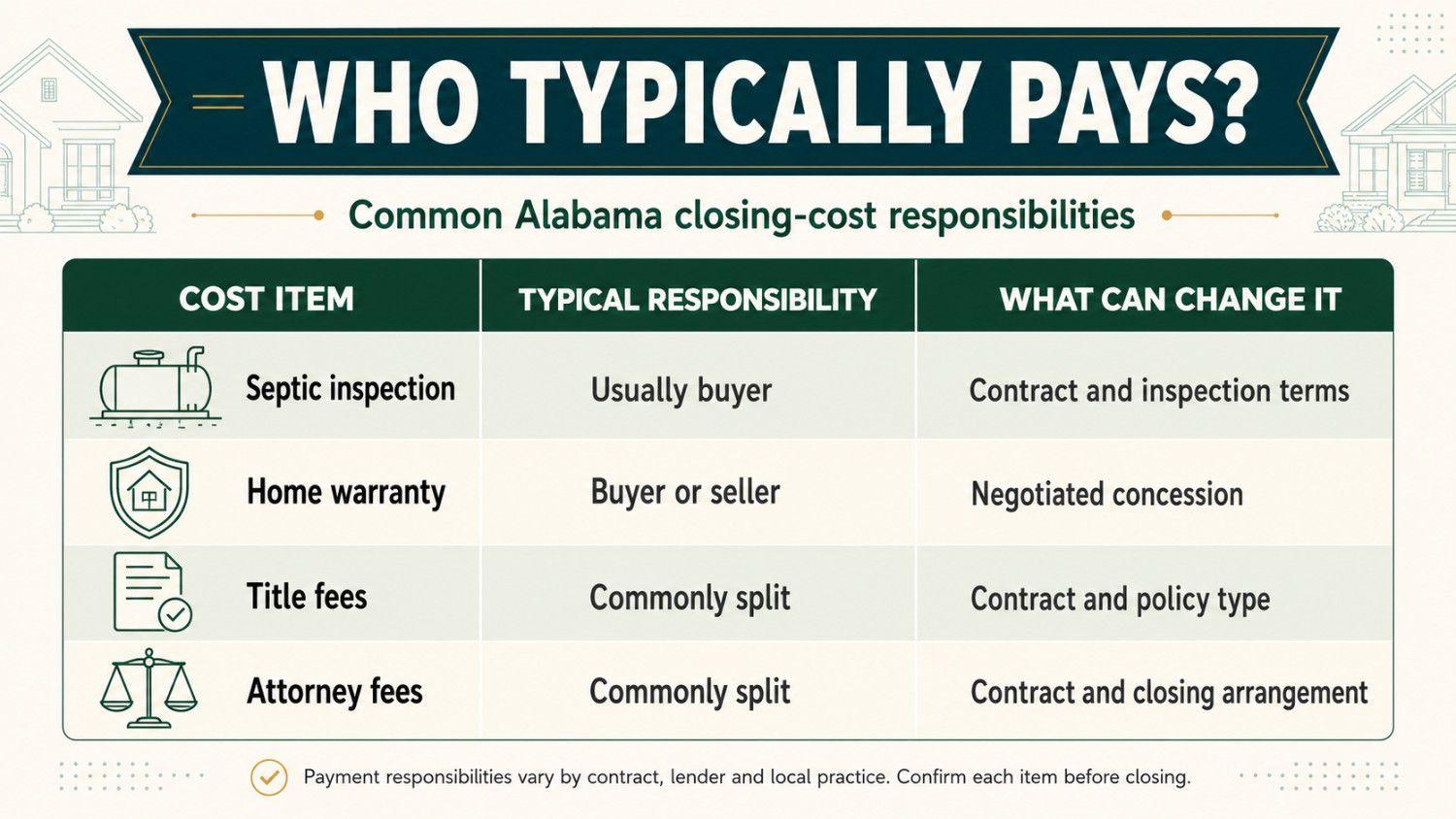
Jonathan walked me through why that happens. A lot of it traces back to online lenders who don't know local closing attorney fees or regional norms and to loan officers who skip the upfront due diligence. He builds an itemized list early in preapproval, capturing septic inspections, home warranty costs, and title and attorney splits, so buyers and sellers aren't blindsided later.
That upfront accuracy protects everyone at the table. No seller wants to hear their $7,500 credit turned into $16,000 overnight, and no buyer wants a surprise bill days before closing.
Jonathan also factors in details a lot of agents never think to ask about, like whether a property is on septic or sewer, how many months of taxes and insurance need to be collected in escrow, and even what day of the month the closing falls on. On larger loan amounts, those small details add up fast, and catching them early is what keeps a $7,500 estimate from ballooning into something a seller never agreed to.
“When you're self-employed, you have that juggling act of claiming everything on your taxes to show the income and then paying way more in taxes than you should... we always want to start with the tax returns because it gives us the biggest range of products that they can use.”
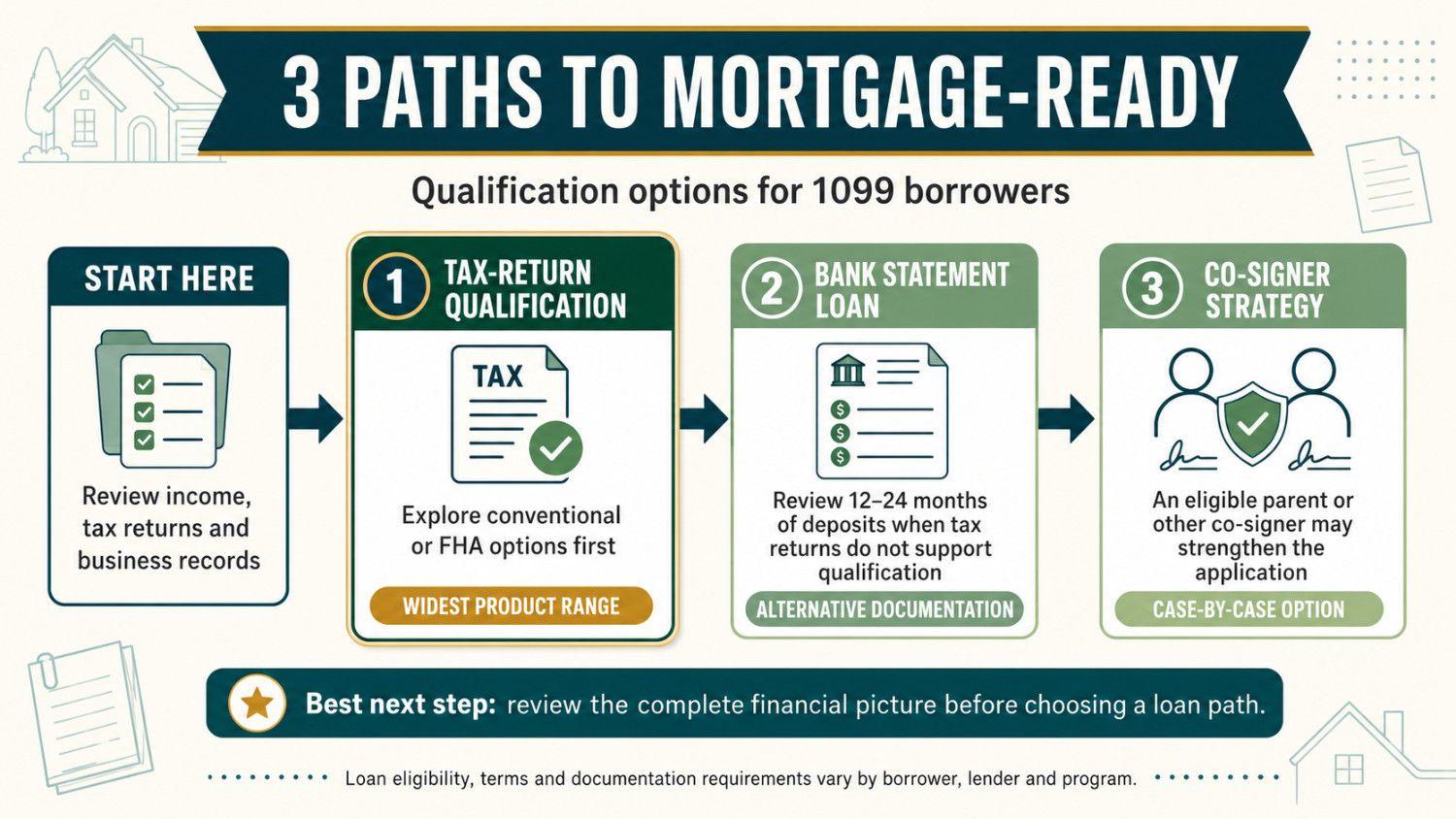
Jonathan starts every self-employed file with tax returns because they open the door to the widest range of self-employed mortgage options, including conventional and FHA loans. Deductions, depreciation, and mileage don't automatically disqualify a buyer; they just require a lender willing to read the whole return.
If tax returns won't work, bank statement loans are next. Jonathan reviews 12 to 24 months of statements, though the math varies by industry. A gas station owner, for example, might have income discounted by 50% to account for inventory costs.
Buyers can explore the full range of different types of mortgage loans New American Funding offers before assuming they need a non-QM loan.
Jonathan doesn't limit "self-employed" to business owners. Anyone who receives a 1099, whether an Uber or DoorDash driver, a content creator, or another gig worker, falls into the same category, and often into the same younger buyer pool.
For younger 1099 borrowers, a parent co-signer can sometimes open doors that a higher down payment or interest rate would otherwise require. Jonathan also works directly with CPAs during tax season, sometimes helping clients adjust how they itemize so they qualify through traditional channels instead of defaulting straight to bank statement loans, which can carry higher down payments and fees.
Jonathan sees this most often with clients who own multiple, interconnected businesses, like a buyer with five gas stations, where the tax return alone can look intimidating enough that a lender defaults straight to a bank statement loan for the sake of simplicity. He'd rather take the extra time upfront to see whether traditional financing is still on the table before assuming it isn't.
“Setting the expectation up front... it's not going to be that quick online blanket pre-approval. And he's going to ask you for stuff... we're going to do our due diligence and make sure we look at those tax returns on the front end.”
I've changed how I coach self-employed clients before they ever call a lender. Instead of house-hunting first, I tell them to get their documentation together and schedule a mortgage pre-approval process consultation early, since self-employed files simply take longer to underwrite properly.
The biggest mistake I see is agents stepping into the lender's role and guessing which loan program a client needs. Jonathan would rather do the due diligence than assume, and that protects the client from ending up in a program that costs more than necessary.
<blockquote>"I am a firm believer that interest rates shouldn't be the determining factor on whether or not you buy a house... the longer you wait on rates, the higher the cost of the home is going to be, so you're negating the benefit of a lower interest rate."</blockquote>
I stopped telling hesitant buyers to "wait for rates to drop." Jonathan's right that home prices tend to outpace any savings from a lower rate, especially as more buyers relocate to Alabama for lower property taxes, more affordable insurance, and homes that cost half what they would elsewhere.
When clients ask about the Alabama real estate market, I point them toward realistic conversations about mortgage rates early, rather than delaying their search. I also encourage them to start browsing homes for sale in Alabama while their financing is being finalized, so they're ready to move the moment they're cleared to buy.
That's the shift Jonathan Robert of New American Funding helped me make in how I now guide every self-employed client I work with.
Want to hear my full conversation with Jonathan on how self-employed and 1099 buyers qualify for a mortgage?
Frequently Asked Questions
Yes. Jonathan starts most self-employed files with tax returns because deductions and depreciation don't automatically disqualify a buyer from conventional or FHA financing.
Options range from tax-return qualification to bank statement loans, and in some cases a co-signer, depending on income documentation and business type.
Not necessarily. Home prices typically rise faster than rates fall, so waiting can increase overall cost more than a slightly higher rate would.
If you're a real estate professional, lender, or industry expert with insights that help buyers and sellers make smarter decisions, I'd love to have you on No Excuses. Whether you specialize in financing, contracts, or market trends, this is a chance to share what you know with an audience actively navigating the real estate process in Jasper and across Alabama!
No Excuses is produced by Icons of Real Estate, the #1 Real Estate Podcast Network. If you are a real estate professional, apply to be a guest speaker across the network!








Whether you are buying a home in town or a retreat on Smith Lake, Deanna is your local connection. She leverages deep community roots to find properties that perfectly match your lifestyle. Connect with her to start your journey.